

Now available to watch on-demand.
Methotrexate (MTX) testing supports therapeutic drug monitoring in both severe autoimmune diseases and cancers. It is important that clinical laboratories understand its role across high-dose therapy to optimize treatment and prevent toxicity.
In this educational SelectScience® webinar, Dr. Stacy Kenyon, Medical Director, Core Chemistry and Point of Care Testing, and Dr. Francis Eshun, Associate Professor and Pediatric Hematologist/Oncologist, Phoenix Children’s Hospital, will highlight the critical role of MTX in therapeutic drug monitoring from both a laboratorian and clinician perspective.
Depending on the clinical setting, MTX testing can be used in high-dose oncologic regimens to guide leucovorin rescue, or to support routine laboratory safety monitoring across all indications to detect organ toxicity.
In oncology, high-dose MTX is used to treat cancers such as osteosarcoma or acute lymphoblastic leukemia. Serial serum MTX concentrations are essential to identify delayed drug clearance, which can lead to life-threatening toxicity of other cells and organs. It is also used to guide the rescue of noncancerous cells by infusing leucovorin which helps protect healthy cells from toxicity. Importantly, MTX monitoring can help identity patients who are at particular risk of adverse effects, such as those affected by renal impairment, third-space fluid collections, or drug interactions which may delay MTX elimination.
In this session, our experts will cover important aspects of therapeutic drug monitoring in the setting of high-dose MTX in oncology, and will share strategies on how laboratories can implement appropriate MTX testing that supports safe and effective treatment. The role of timely MTX measurement will be discussed as well as MTX assay methodologies, and potential challenges, including monitoring pediatric patients that have received glucarpidase.
Accreditation statement
SelectScience® is approved as a provider of continuing education programs in the clinical laboratory sciences by the ASCLS P.A.C.E.® Program. Attendees of these webinars may be entitled to 1.0 ACCENT Continuing Education Credits from the ADLM. This activity was planned in accordance with ACCENT® Standards and Policies. Verification of Participation certificates are provided to registered participants based on completion of the activity, in its entirety, and the activity evaluation. For questions regarding continuing education, please email education@myadlm.org.
Webinar details
- Cost: Free to attend
- Location: Online
- Duration: 60 minutes
- Instruction level: Intermediate
- Accreditation: ACCENT® & P.A.C.E.® eligible
Registration is required to secure your place. If you register but can’t attend live, you will receive a link to the on‑demand recording once it becomes available.
Sources:
Larsen EC, Devidas M, Chen S, et al. Dexamethasone and High-Dose Methotrexate Improve Outcome for Children and Young Adults With High-Risk B-Acute Lymphoblastic Leukemia: A Report From Children's Oncology Group Study AALL0232. J Clin Oncol. 2016; 2380-8.
Hunger SP, Mullighan CG. Acute Lymphoblastic Leukemia in Children. NEJM. 2015; 1541-52.
Pediatric Acute Lymphoblastic Leukemia. National Comprehensive Cancer Network. Clinical Guideline; Updated Aug 2025.Who should attend?
This event is perfect for:
- Lab directors
- Lab administrators
- Lab technicians
- Oncologists
Key learning objectives:
- Describe the pharmacologic classification and mechanisms of action of methotrexate, as well as the clinical rationale for monitoring serum MTX concentrations, primarily during high-dose MTX therapy.
- Evaluate the role of timely MTX measurement in reducing toxicity, improving adherence, and optimizing patient outcomes.
- Discuss the strengths and limitations of various MTX assay methodologies for monitoring in the setting of high-dose MTX therapy.
Presenters
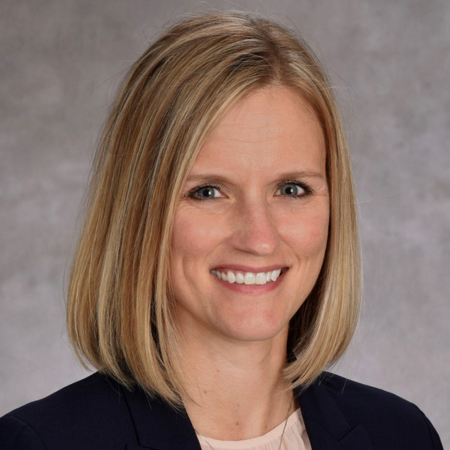
Stacy Kenyon
Ph.D., DABCC, FADLM
Assistant Clinical Professor; Medical Director, Core Chemistry and Point of Care Testing, Phoenix Children’s Hospital, University of Arizona, Phoenix, Arizona, USA

Francis Eshun
MD
Associate Professor; Pediatric Hematologist/Oncologist, Phoenix Children’s Hospital, University of Arizona, Phoenix, Arizona, USA

Olivia Long
Moderator, Editorial Team
SelectScience